
Finding Lebanon Residents
Lebanon is the Wilson County seat, but there is no single government roll of everyone who lives in the city. Start with the type of fact needed. A current property address leads to the assessor and GIS records. A recorded ownership question leads to WilsonDeeds. A named registration-status question uses the Tennessee voter tool. A past household calls for a library, archive, directory, census, or obituary trail. These sources overlap, but they do not mean the same thing.
County parcel records identify an owner of record and may show a mailing address, situs address, parcel number, and transfer detail. They do not establish who occupies a property. A deed records parties to an instrument, not a census of a household. Lebanon resident research is strongest when a name, a place, and a date agree across two independent records rather than when one search result is treated as conclusive.
- Search the Wilson County assessor viewer by owner, address, or parcel when a Lebanon location is known. Save the parcel ID, legal description, situs, mailing address, and transfer reference.
- Use GIS Identify to compare the parcel polygon, address point, roads, and city-limit context. Check the Results list when an address search returns more than one point.
- Search WilsonDeeds by the current owner as grantee and the prior seller as grantor. Keep the date, instrument number or book and page, document type, and legal description.
- For a named Tennessee registration question, use the Wilson County selection with the exact first and last name plus birth month and year. Treat the result as a status match, not proof of a household.
- For older Lebanon residents, ask the library reference desk, Wilson County Archives, or TSLA for the specific directory, newspaper, marriage, probate, school, or cemetery series needed.
Note: A precise request for an existing book, file, page, or date range is more likely to be usable than a request for a newly compiled resident list.
Lebanon Records Offices
Three Wilson County offices form the core of a Lebanon name-and-address search. The Register of Deeds keeps recorded land instruments. The Property Assessor maintains the tax-card and parcel layer. The Election Commission handles voter registration records and local election geography. The County Clerk has a different role, including marriage-license process, notaries, business tax, passport, and vehicle or boat work, so it should not be mistaken for the deed custodian.
Wilson County Register of Deeds
228 E Main Street, Room 108
Lebanon, TN 37087
615-443-2611
Wilson County Property Assessor
228 E Main Street, Room 4
Lebanon, TN 37087
615-444-8661
Wilson Election Commission
230 E Gay Street
Lebanon, TN 37087
615-444-0216
Wilson County Archives at 111 S College Street is the historic counterpart. It holds county series that do not behave like a modern name portal, including court, probate, deed, marriage, birth, death, school, election, minute, and license material. Use the office that holds the actual record, especially when a result needs correction or a certified copy.
Lebanon Parcel and GIS Clues
The Wilson County Property Search and GIS viewer is the practical starting point for a Lebanon address. Its groups include Parcel Search and Address or Street Search, and the map offers Results, Identify, Map Layers, Download, and Print controls. Tax Parcels describe the parcel, while address points support an address search. Layers include parcels, roads, city limits, zoning, subdivisions, districts, aerial photography, historic aerials, and other map context.
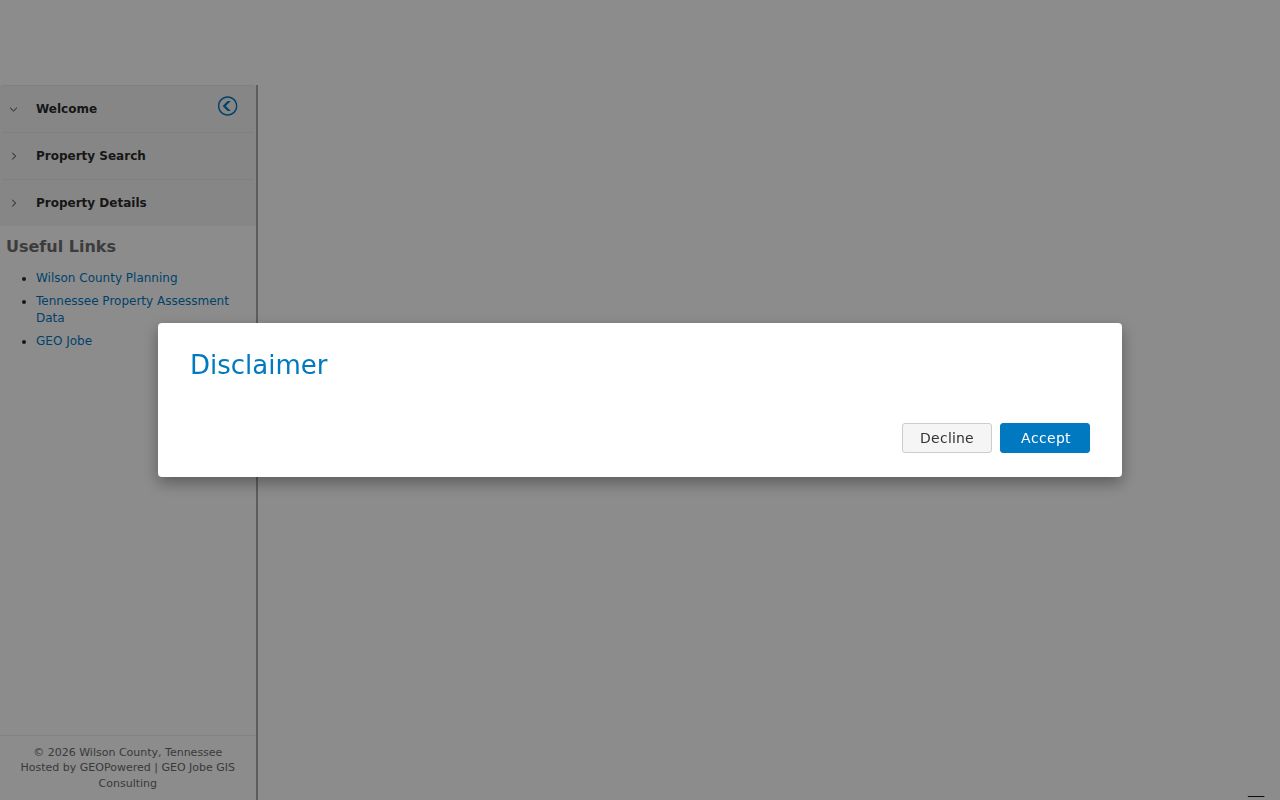
Use Identify after selecting a result. The parcel record can connect the Lebanon street address to tax information, an owner of record, a parcel identifier, and map position. Mailing address and situs are separate assessor fields, so a mailing city is a lead for further checking, not a claim that someone lives at the property.
| Viewer control | Input or action | Lebanon research use |
|---|---|---|
| Parcel Search | Optional text | Find tax-parcel descriptors when the parcel is known. |
| Address or Street Search | Optional text | Find an address point, then review all matching results. |
| Advanced parcel or sales | Optional filters | Narrow a property or transfer question where controls are enabled. |
| Map Layers | Tabs and checks | Compare parcel, road, subdivision, zoning, city-limit, and aerial layers. |
| Identify and Results | Map click or list | Choose the correct parcel before recording its owner or tax detail. |
| Download and Print | Toolbar or tab | Export map data or make an 8.5 by 11 reference map, not a household list. |
Insider tip: The assessor mailing-address-change form itself shows why a Lebanon tax mailing address and the physical situs should be recorded separately. The viewer is an ownership and geography tool, not evidence of every resident at an address.
Lebanon Deed Search Timelines
WilsonDeeds uses several time scales that matter in Lebanon research. It states that deed images reach back to 1793, scanned index pages go back to 1925, and a modern deed index and image path begins in November 1984. Trust deed index and image coverage begins in November 1992, plat index and image coverage in March 1987, and the address field was added in January 2003. Older work often shifts from a street address to names, lot and subdivision, legal description, book and page, or scanned books.
Its name search accepts a last name or name, party role, category, document type, recording-date range, book or instrument mode, and legal-description fields. Pure Alpha is the default name mode, so spaces, punctuation, and special characters do not belong in the query. Search both grantor and grantee roles. A company, trust, estate, suffix, or spelling variant can change the result set. Expanded records expose party role, recording date, book and page or instrument number, document type, legal-description text, and an image or request path.
- Parcel
- A tax-map unit used by the assessor and GIS. It is not the same thing as a street address.
- Grantor and grantee
- The party giving an interest and the party receiving it in a recorded instrument.
- Index
- A finding aid to recorded instruments. An index result and a certified document have different purposes.
- Legal description
- The recorded land description, often using subdivision, lot, block, or metes-and-bounds language.
For a current Lebanon parcel, start from the assessor transfer reference, then follow the current grantee backward to the seller as grantor and to the seller's earlier acquisition. A release, satisfaction, lien, or trust deed is not automatically an ownership transfer. Preserve the instrument type and legal description before drawing a conclusion.
Lebanon Voter Lookup Limits
The Tennessee Voter Registration Lookup requires County, First Name, Last Name, Birth Month, and Birth Year. Select Wilson County for a Lebanon search. The portal is suited to confirming a matching named registration or absentee-status result. Its help directs a nonmatch to the county commission for the exact information shown on the registration card.
Myth: A voter lookup is not a Lebanon street roster. It does not provide a public browse of every address on a block, and voter status does not prove present physical occupancy or household composition. Tennessee's public-record notice excludes Social Security numbers, driver-license numbers, and Department of Safety identification. For a records request, ask the Election Commission for a defined existing record, date range, fields, format, and inspection or copy option.
The Wilson Election Commission also publishes maps for Lebanon wards and county districts. Those maps help locate election geography, but a ward or precinct is not a directory of its residents. Safe at Home and other protected-address rules can limit what should be treated as public even when a broader record system normally allows inspection.
Lebanon Public Records Requests
Tennessee's public-records framework is the Tennessee Public Records Act, T.C.A. §§10-7-501 et seq., especially §10-7-503. The law generally permits inspection of public records, while lawful copying and production charges may apply. If a requested record is not immediately available, the custodian should provide it or a written response within seven business days explaining when it will be available. That is a response rule, not a universal promise that every request will be completed in seven days.
The county's public-records policy calls for an itemized estimate before charges. Ask for an existing document, scanned book page, report number, permit file, or bounded date range. Lebanon's city request route accepts requests by department, date range, address, record type, and case or permit number, with inspection or copy choices. The city policy requires Tennessee citizenship proof for inspection or copies and says inspection has no fee, although copying and delivery can cost.
City OnBase guest access, planning files, codes requests, police records, and cemetery information are separate channels. The city has not published complete search fields or citywide coverage for every one of those systems. A request should name the likely custodian and describe an existing record instead of asking an office to create a new citywide list of residents.
Current Lebanon Resident Sources
Current Lebanon directories are really separate official and community sources. Each gives a different kind of signal, and several are limited to named queries or public roles. The table distinguishes the record holder from the meaning of the result, which prevents an owner, recorded party, staff member, or association contact from being described as the same kind of resident record.
| Lebanon source | Person or place signal | Custodian | Access route |
|---|---|---|---|
| Assessor and GIS | Owner of record, parcel, situs, mailing, transfer | Wilson County Property Assessor | Viewer, office, or state assessment search |
| Tennessee voter lookup | Named registration and absentee-status match | Wilson Election Commission and state | Required county, name, and birth fields |
| WilsonDeeds | Recorded grantors, grantees, and legal interests | Wilson County Register of Deeds | Name, date, instrument, or book search |
| City staff directory | Department names, public roles, and phone routing | City of Lebanon | Public city directory, not a resident roll |
| Community and archive sources | Public member, civic, historic, or institutional context | Organizations, library, Archives, and TSLA | Public pages, reference help, or collection request |
The official path is best for checking a defined claim. Compiled commercial profile services can bundle public, licensed, and historical material, but their data may be dated, merged across namesakes, or missing context. They are not a substitute for checking the office record. For a one-person sequence that compares independent sources, use the Lebanon resident lookup process.
Lebanon Court Search Paths
Local court access is clerk-centered. Circuit, General Sessions, Family, Juvenile, Probate, and Chancery matters route through the Wilson County judicial offices and the appropriate clerk. CaseFinder describes a 24-hour inquiry system for Circuit and General Sessions Civil cases, but it requires an email address and password. Probate and Chancery files route through the Clerk and Master, and no local public online probate index was located in the research.
The Tennessee AOC Public Case History is the open appellate path. It searches a case number of appeal, case style, a party's first or last name, or organization. Its coverage is for appeals with a record filed after September 1, 2006; later motions, orders, judgments, and opinions can be directly accessible, while older material may have been transferred.
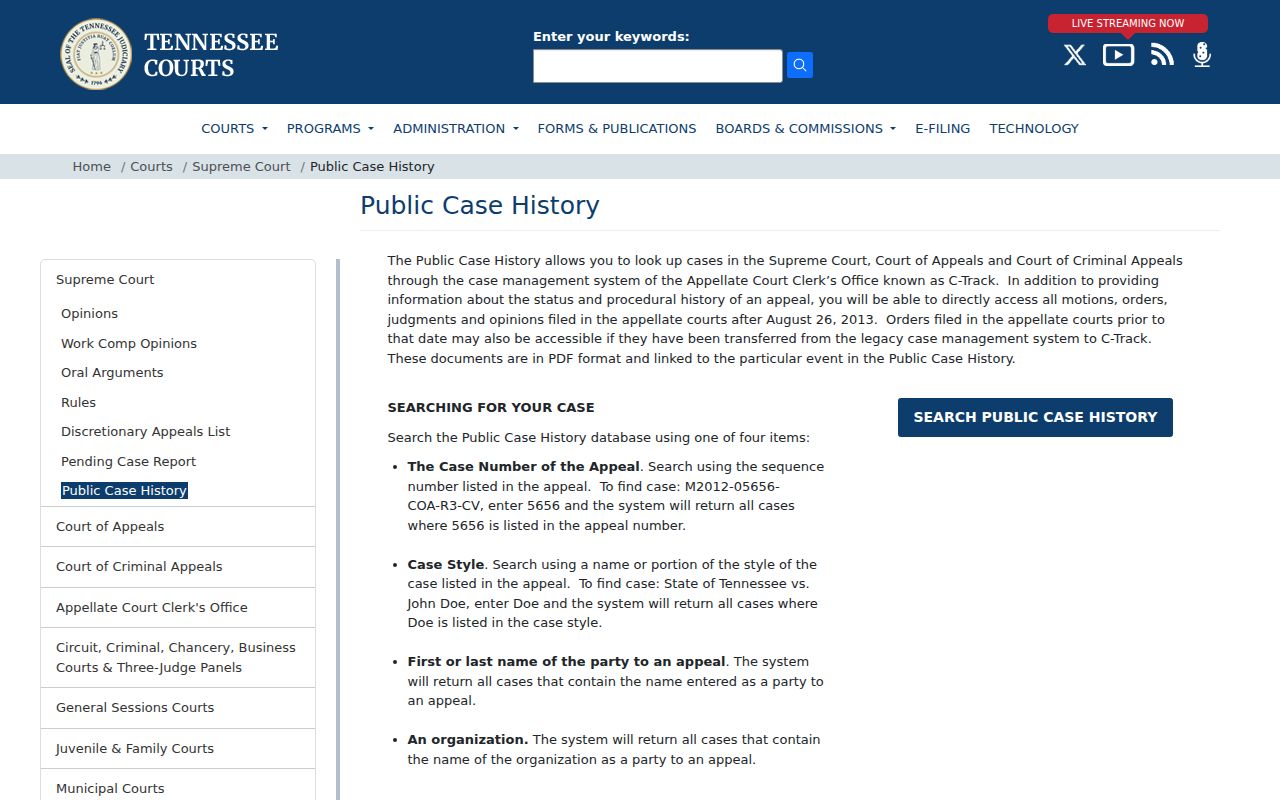
An appellate result may show case number, style, parties, originating court, record and filing dates, procedural history, and posted documents. It does not replace a local trial-court file. Give a clerk the court or division, full party name, approximate year, case number if known, and whether a docket, judgment, filing, or certified copy is needed. Sealed, juvenile, adoption, protected family-law, and expunged material should not be expected.
Lebanon Vital Record Boundaries
Tennessee Vital Records handles certified birth, death, marriage, divorce, amendment, and verification requests under entitlement and identification rules. Any county health department can issue statewide registered birth and death copies, while the state office issues marriage and divorce certificates for eligible requesters. Wilson County Clerk handles the marriage-license process, which is distinct from ordering a state certificate or locating historic county material.
Current unrestricted name indexes for these records were not located. Birth records have a 100-year transfer horizon stated on the state form, and death records use a 50-year historic horizon. The divorce form says older records may be at the court clerk or TSLA. Relationship, ID, and sometimes notarization affect access. For early Lebanon family research, Wilson Archives, TSLA, FamilySearch catalog entries, church material, cemetery records, newspapers, and probate files are better fallback channels than assuming a modern vital portal will return a result.
Vital confidentiality is not a search obstacle to work around. T.C.A. §§68-3-205 and 68-3-206, along with the state rules, govern disclosure and copies. Ask the custodian about the eligible route and use historic collections only for the period they actually cover.
Lebanon Source Comparisons
Lebanon records are easiest to use when the access model is clear. A free index may locate a file but not deliver an image. A clerk file may be inspectable but not searchable by a broad public form. A protected record may require a relationship or documented entitlement. Comparing those models keeps a search from stopping at the first portal that happens to return a name.
| Record route | What it can support | Key limit |
|---|---|---|
| Official assessor, deed, voter, and clerk records | Defined parcel, recorded party, named status, or case-file fact | Each source has its own coverage, access, and meaning. |
| Historic library and archive material | Older household, institutional, family, and place context | Runs can be incomplete, image-only, or held only at a reference desk. |
| Compiled commercial profiles | A lead to verify with a custodian | Namesake merges, outdated data, and missing source context are possible. |
Use a result as a lead, then return to the actual custodian. A parcel ID, deed book and page, appellate case number, archive call number, or directory edition and page is far more useful for verification than a bare name shown without a source date.
Lebanon Statewide Lookup Options
Some questions about a Lebanon name belong to a statewide system rather than a local directory. The Tennessee Bureau of Investigation registry searches last name, alias, address, city, county, ZIP, offender ID, status, and offense, with advanced options. It is updated daily, and displayed data should be read with the registry's limits rather than copied into an unsupported conclusion.
The TBI registry search shows its available field choices before a query is submitted.
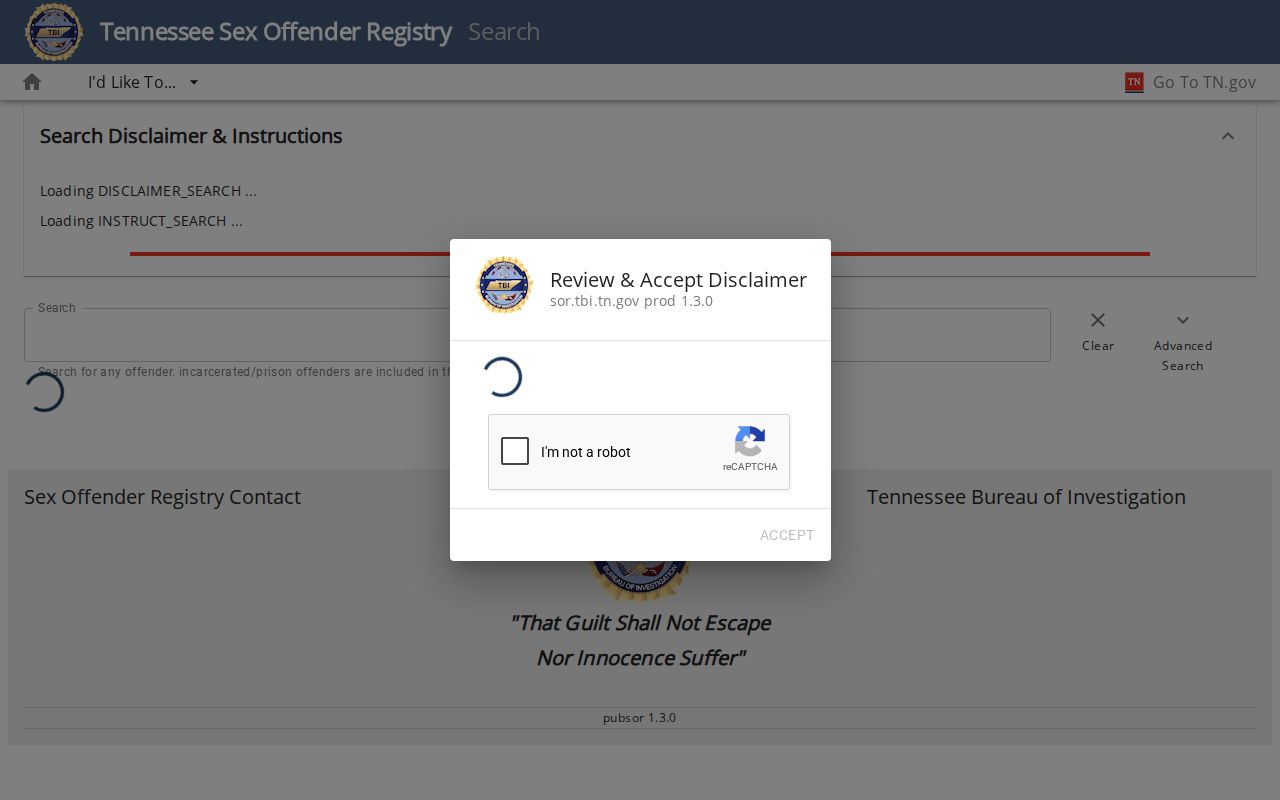
The result route is statewide and does not stand in for a Wilson County jail roster. No official public Wilson County jail name-search roster was located. For an institutional custody question, the Sheriff jail contact is the documented local route, while the registry's anti-threat, stalking, and harassment warning remains important.
The Tennessee Department of Correction FOIL search uses name or identification modes with first and last name, race, TDOC ID, State ID, aliases, and a CAPTCHA.
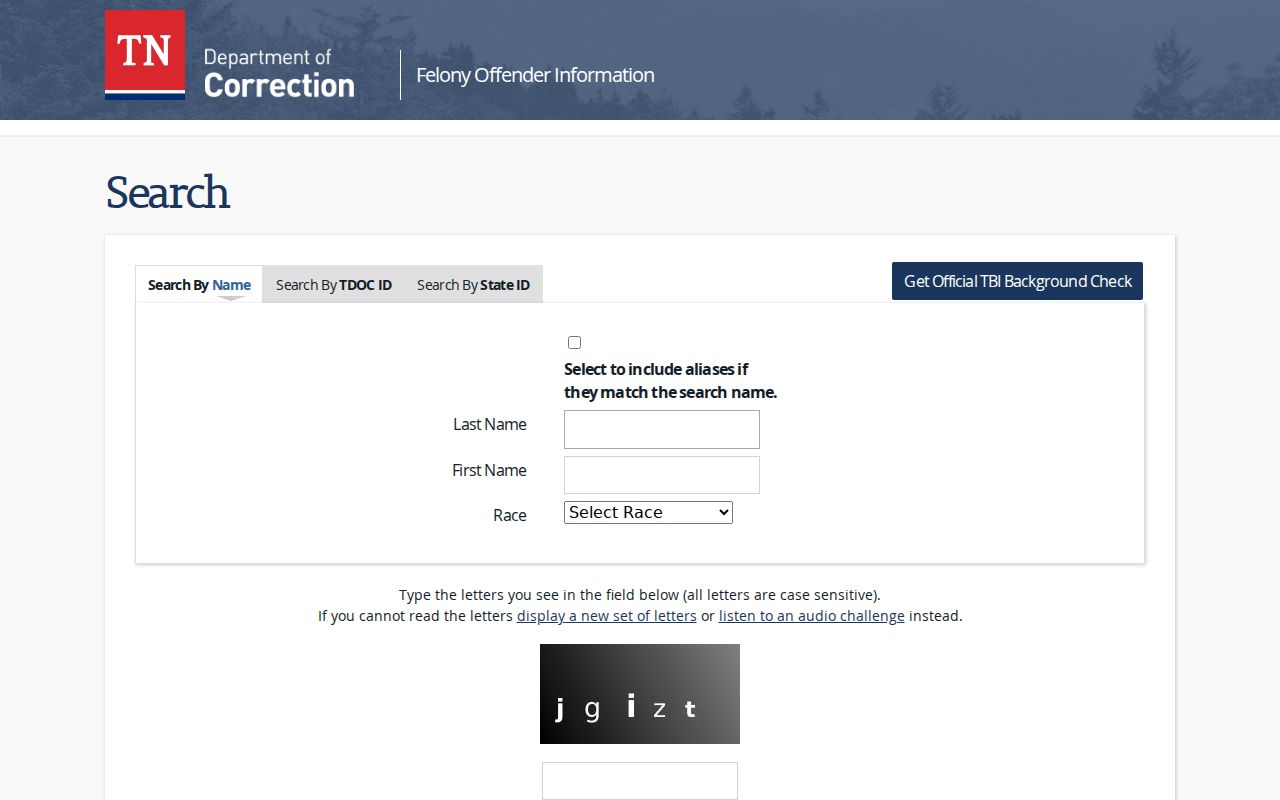
FOIL concerns state felony custody and does not cover a local Wilson jail booking. Federal custody has its own Bureau of Prisons locator. A status or location result is never permission to contact, follow, threaten, or harass a person.
The Tennessee Commerce license search offers individual or business name, selected license type, license number, city, Tennessee county, and type-only modes.
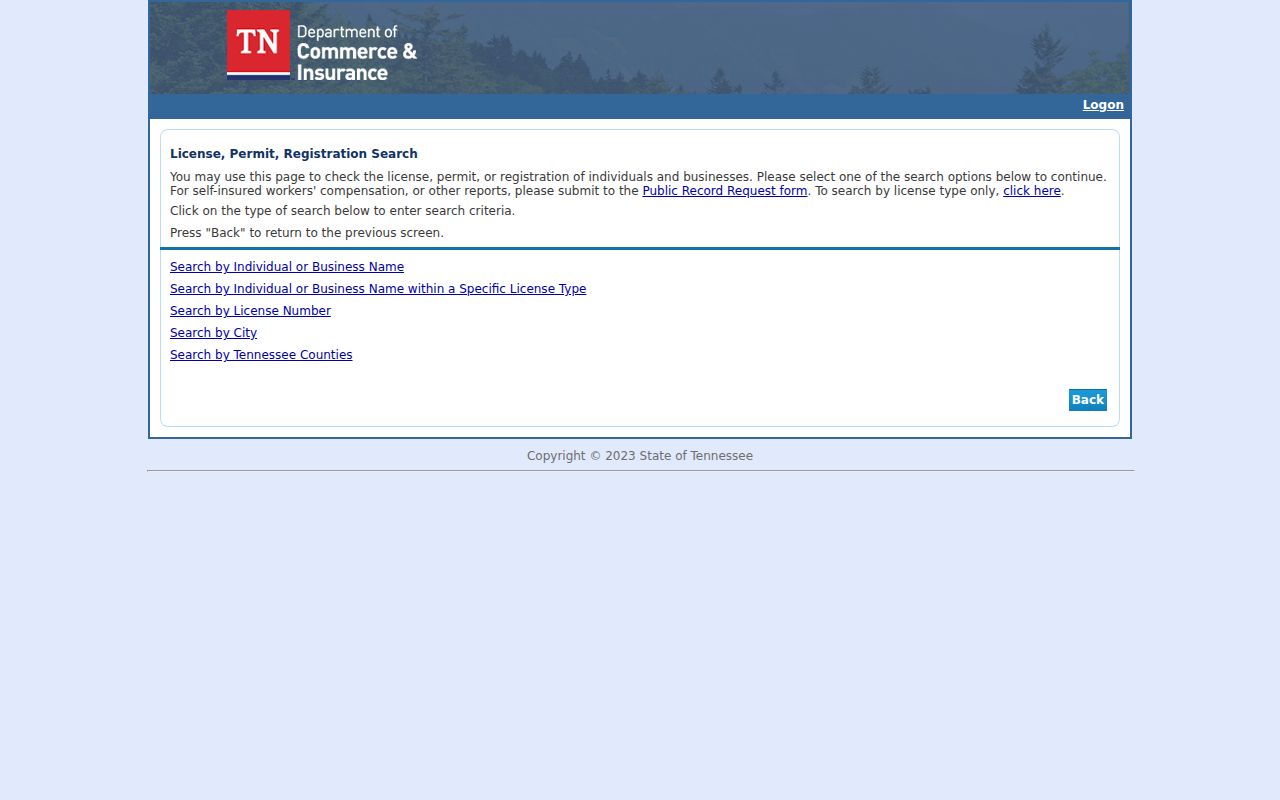
Where a result is available, a state license can show a name, license status, expiration, or discipline information. It is a professional-regulation record, not a Lebanon household record. The Secretary of State entity search and health licensure reports are similarly separate statewide channels.
Lebanon Directory History
Historical Lebanon directories are best treated as dated snapshots. The Ancestry U.S. City Directories collection spans 1822 through 1995 nationally, and research confirmed a Lebanon 1927 entry, but the complete local run and publisher list were not published on an official local shelf page. The Lebanon-Wilson County Public Library, Wilson County Archives, TSLA, FamilySearch, and Library of Congress guides form the practical access chain when an online search misses a name.
A directory entry may show a surname and given name, spouse or household name in parentheses, address, telephone, occupation or affiliation, business listing, widow notation, and abbreviations. An occupant in a directory may not be the titled owner, and an owner may receive mail elsewhere. Record the edition, publisher, page, street spelling, and cross street, then pair the entry with a deed, parcel record, newspaper, marriage, probate file, or the 1930, 1940, or 1950 census. The fuller collection trail belongs in the Lebanon city directory collections.
The public library at 108 South Hatton Avenue provides the reference route for directories, newspapers, obituaries, yearbooks, reverse directories, and licensed databases when its web inventory does not name exact runs. Ask for a specific surname variant, approximate neighborhood, date range, and record type. That gives staff a question they can trace through Lebanon holdings.
Lebanon Archives After 1881
Wilson County formed in 1799, and Lebanon became its county seat. TSLA records an 1881 courthouse fire, so a missing original document cannot by itself prove that a person or household was absent. Check whether a desired series is original, reconstructed, indexed later, transferred to another custodian, or simply not located. This local history explains why a modern portal and an archive shelf may give very different results for the same name.
Wilson Archives began in 1995 and moved to 111 S College Street in 1998 under county and Public Records Commission oversight. Its holdings include mortgage deeds from 1829 to 1931; marriages, licenses, and bonds from 1802 to 1953; wills from 1802 to 1964; court minutes and files; probate series; election records; school material; and early birth and death records. TSLA also lists county minutes, City Hall minutes, newspapers, cemetery and church records, tax lists, deed publications, and African American records.
Those sources make Lebanon resident research more resilient than a single search box. They also show why dates matter. The address search in WilsonDeeds begins only in 2003, while earlier deeds may survive through a name index, scanned book, legal description, archive series, or publication. Keep a citation for the exact volume, page, collection, or record series used.
Lebanon Privacy and Corrections
Tennessee Safe at Home, T.C.A. §§40-38-601 et seq., provides a substitute address for qualifying participants. It does not erase identity or existing obligations, and it has exceptions for property listing, appraisal, assessment, property-tax collection, and recorded real-property documents. That distinction matters when a Lebanon assessor or deed result appears to conflict with a protected address arrangement.
Correct a record with the office that owns it. Use the assessor mailing-address-change route for an assessor record, the Wilson Election Commission for voter information, Tennessee Vital Records for an amendment supported by documents, the originating court for court material, and the Register of Deeds for the appropriate correction instrument. Removing a compiled online profile does not change the official Lebanon record beneath it.