
Lebanon Previous Residents by Era
A backward address trail changes source as it crosses time. WilsonDeeds is useful for recent indexed transfers and for scanned pages, while the county Archives and state collections fill older gaps. Directories and census schedules answer an occupancy question differently from a deed. Begin with the current parcel and legal description, then use the era table to choose the next holder instead of applying a modern address search to every period.
| Source | Years | Holder | What it shows |
|---|---|---|---|
| Deed images | 1793 stated | WilsonDeeds | Recorded instrument images where available. |
| Scanned deed index | Back to 1925 | WilsonDeeds | Browsable index pages, not a universal name database. |
| Deed index and images | From November 1984 | WilsonDeeds | Modern party, date, type, and related document search. |
| Mortgage deeds | 1829–1931 | Wilson County Archives | Historic borrowing and title context. |
| Lebanon directory evidence | 1927 local evidence; 1822–1995 national collection | Library or directory collection access | Dated names and address evidence when an edition is available. |
| Federal census | Through 1950 public release | NARA, FamilySearch, or Ancestry access | Household context at a decennial enumeration date. |
| Birth and death archive series | Selected 1881–1886, 1907–1912, and 1925–1939 runs | Wilson County Archives | Historical endpoints for a person’s local trail. |
The exact local directory run, publisher history, and Sanborn sheet years were not located in official sources. That is a reason to ask the library or Archives for a specified street and year, not a reason to fill a missing interval with an assumed household.
Lebanon Previous Residents Deed Path
Start with today’s assessor result even when the goal is past residents. The property card can provide the owner-of-record, parcel ID, property address, mailing address, subdivision or lot, and transfer reference. The legal description matters because it follows the land when a street name, number, city-limit status, or postal label changes. A deed records a title transaction, which is distinct from a person living at the address.
WilsonDeeds is the Register of Deeds portal for deeds, trust deeds, plats, liens, restrictions, easements, releases, and recorded instruments. Its party fields let a researcher move between buyers and sellers. Capture each instrument’s party roles, recording date, document type, book and page or instrument number, legal description, subdivision or lot, consideration when shown, and image status. Keep these details in a row for every link.
- Save the current parcel ID, property address, owner-of-record, legal description, and transfer book or page from the assessor card.
- Find that transfer in WilsonDeeds. Treat the current buyer as the grantee and identify the seller as the grantor.
- Search the seller as a grantee to locate that person’s acquisition of the same land. Compare legal descriptions rather than relying only on the address.
- Repeat the grantee-to-prior-grantor sequence. Record any plat, correction, restriction, release, or easement that affects how the parcel should be read.
- When online coverage ends, take the book, page, parcel, subdivision, lot, and legal-description details to the proper scanned-book, Register, Archive, TSLA, or FamilySearch route.
Lebanon WilsonDeeds Coverage Cutoffs
WilsonDeeds has several coverage layers, and they should not be collapsed into one start date. The portal states that deed images go back to 1793. Scanned index pages reach back to 1925. Deed index and image coverage starts in November 1984, trust deed index and images in November 1992, plat index and images in March 1987, and liens in January 1994. The site also offers image-request and certification paths when an image is not immediately available.
Those numbers describe digitization and search access, not a promise that every historical name will appear in the same search box. For a pre-digital chain, an image may exist while the usable route is a scanned index page or a book reference. Wilson County Archives holds a separate set of historic material, including mortgage deeds from 1829 to 1931, probate deeds from 1843 to 1947, administrator and executor bonds, wills, court minutes, and marriages. Match the question to the custodian.
Lebanon Address Search Before 2003
WilsonDeeds added address search in January 2003. That is an important cutoff for past residents research. A no-result search using a modern number can mean the instrument predates address indexing, uses an earlier street form, or was recorded under a legal description that is more precise than the street label. The next move is normally a party, book, page, subdivision, lot, parcel, or legal-description search.
Pure Alpha is another local index quirk. The portal’s default name search uses letters only and strips spaces, punctuation, and special characters. Companies, trusts, estates, suffixes, initials, and spelling variants can require several searches. Narrow broad results with party role, document type, date range, or a book and page. If a query returns a large set, preserve the result count and adjust the date or instrument code rather than assuming the first similarly named party is correct.
Note. A release or satisfaction can document the end of a financing interest, but it is not by itself a new ownership transfer in the chain of title.
Lebanon Previous Residents in Directories
Recorded title is only one part of a house history. A directory can place a named person or household at an address for the edition in hand, even when that person does not appear as the owner on a tax card. Lebanon evidence includes a 1927 entry within a national U.S. city-directories collection spanning 1822 through 1995. The research did not establish a complete Lebanon run, so cite the edition, publisher, page, and image before treating an address entry as evidence.
The Lebanon-Wilson County Public Library can help locate directories, reverse or criss-cross books, telephone books, Lebanon Democrat material, Cumberland yearbooks, and licensed genealogy resources. Its public website does not give a complete shelf inventory. A good reference request names the street, house number, surname variants, approximate date span, and whether the search is for an address section or an alphabetical section. A broad request for every Lebanon resident is not as usable.
Older entries can use initials, a spouse in parentheses, a widow notation, an abbreviation, a telephone, an occupation, a business affiliation, or a cross-reference. Read the page heading and abbreviation key. If OCR fails, browse the image or address section. The historical collections themselves are described on the Lebanon city directories page.
Lebanon Previous Residents Across Census Years
Directories and census schedules are complementary, not interchangeable. A directory might list a person between census years and distinguish a street address or telephone connection. The federal census records a household at a particular decennial enumeration date and can add relationships, ages, and birthplaces. The public federal release now reaches 1950. Census geography may include parts of Wilson County outside Lebanon, so compare the enumeration location with the parcel, city-limit, or address evidence.
- Record the directory edition, its address spelling, street number, cross street, and all names on the entry.
- Look to the nearest following or preceding census year, allowing for initials, surname changes, and differing enumeration geography.
- Compare the household result with a deed’s legal description, an assessor transfer, or a newspaper notice. Do not make a later census prove an earlier directory entry.
- Use marriage, death, obituary, cemetery, probate, and administrator-bond material to explain a changed name or the end of a household trail.
Wilson historical sources are especially helpful when a person disappears from an address. The Archives lists marriages and licenses and bonds from 1802 to 1953, selected birth and death runs, wills from 1802 to 1964, and county minutes. TSLA also lists Wilson newspaper coverage from February 1839 through May 1916. Each is a dated lead, not an automatic connection to a parcel.
Lebanon Previous Residents in Archives
Wilson County Archives began in 1995 and moved to 111 South College Street in 1998 under county and Public Records Commission oversight. Its holdings provide an offline bridge when a deed chain reaches older books or when a surname needs family context. Probate deeds, will books, administrator and executor bonds, court minutes, marriage material, births, deaths, elections, school records, and merchant licenses are not interchangeable, but together they can document a person’s life event or estate connection.
Wilson County formed in 1799, and TSLA records an 1881 courthouse fire. A missing original therefore does not prove that no one held an interest or lived at the location. Test whether a series is original, reconstructed, indexed later, or absent. TSLA’s fact sheet adds deed books N–Z for 1829–1853, deeds for 1853–1875, tax lists, cemetery and church material, City Hall minutes, and local-family histories. Use the book or series citation in the research log.
Lebanon House Map Context
Fire-insurance maps can add a physical setting to an address trail by showing footprints, materials, and street context. They do not identify every person connected to a building. The research did not locate exact Lebanon Sanborn sheet years, so state the gap plainly and search for a Library of Congress item record or ask the library or Archives for the relevant year before describing a sheet as local evidence.
The Library of Congress Sanborn search guide describes how to locate and use those map records.
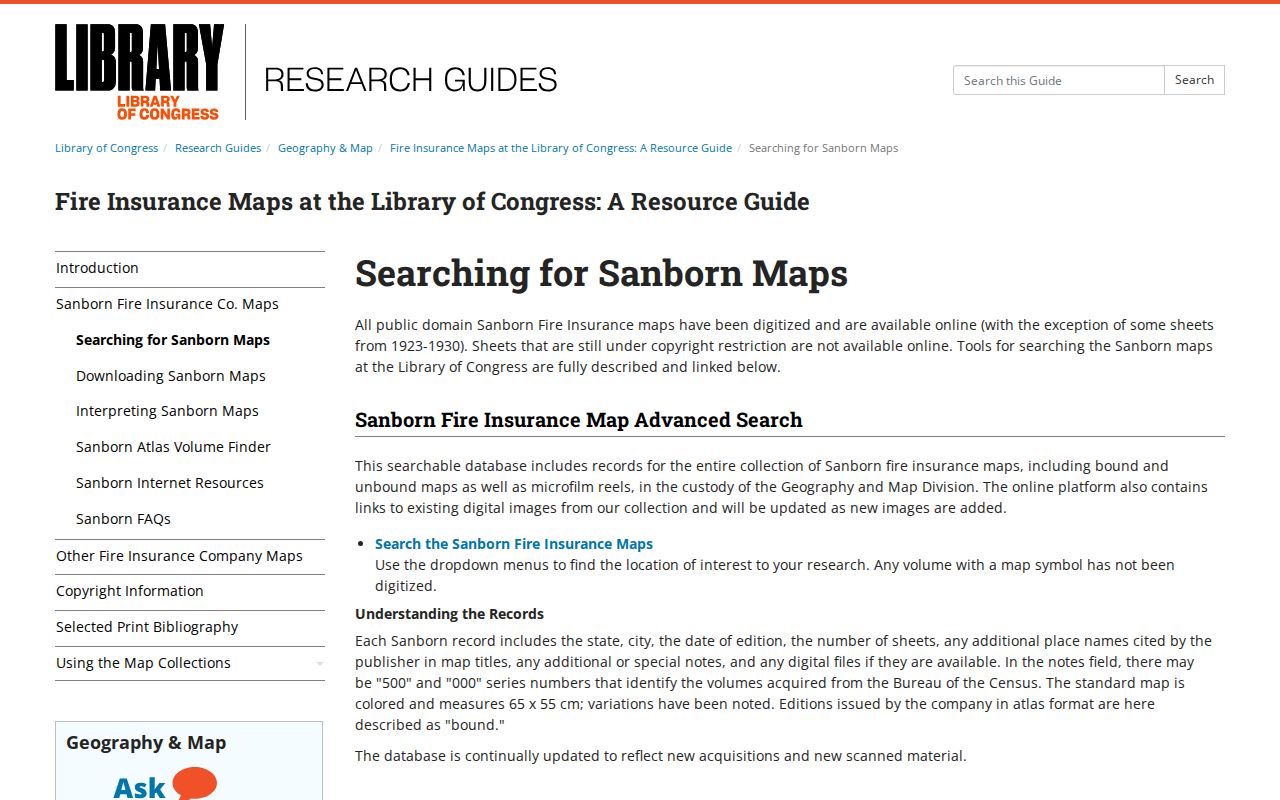
Use a map date as a context date. Pair it with a parcel, deed, directory, census, permit request, or photograph citation before drawing a conclusion about the building or the people who used it.
Lebanon Previous Residents and Historic Districts
Lebanon’s historic districts can provide an address-era context, not a complete house-history service. Greenlawn was established November 18, 2014 and includes 21 houses with Colonial Revival and Tudor Revival examples. East Spring Street was established November 17, 2015 and includes houses dating from the 1900s. West Main was established December 21, 2021, with eleven unmodified houses noted. Those boundaries and descriptions can help frame a research question, but they do not establish a complete succession of occupants.
The city’s Historic Districts information provides the local district context.
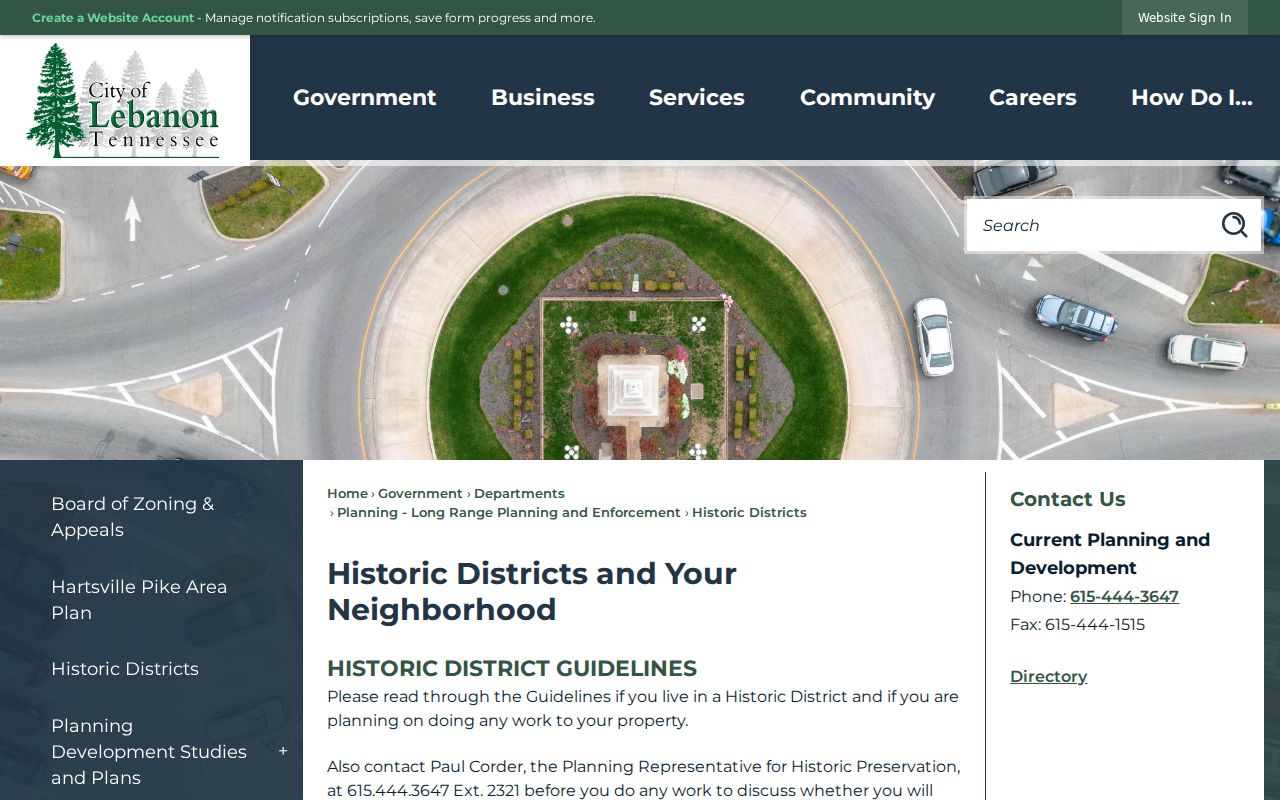
For a building alteration or inspection question, request an existing Building Inspection record by address, date range, and record type. Lebanon does not publish a complete public permit index, so do not assign a construction date without a record that supports it.
Lebanon Previous Residents and Route 66
Elm Street became Route 66 in April 2026 after council and public-hearing action, according to the city’s REDI notice. This recent name change is a practical address-history bridge. A current map search may use Route 66, while a deed, directory, city-minute entry, or newspaper citation uses Elm Street. Save both names and the source date in the same row.
Street names are only one form of address evidence. Compare the parcel identifier, legal description, subdivision or lot, cross street, and city-limit or Urban Growth Boundary layer before connecting an old and new label. Modern ZIP or mailing labels should not be projected backward into records created before those labels were in use. The land description is often the steadier connection.
Lebanon Previous Residents Research Terms
Reading a backward chain is easier when each term keeps its role. The grantor is the party transferring an interest. The grantee is the party receiving it. A chain of title is the documented sequence of recorded interests for the same land. A legal description is the recorded language identifying land, often through a lot, block, subdivision, or other recorded description. It is usually more durable than a street label.
- Criss-cross directory
- A directory arranged by address, useful for a dated address-to-name check when a volume can be located.
- Enumeration district
- The geographic area assigned to a census enumerator. It helps place a household within the census geography for that year.
- Plat
- A recorded map that can explain lots, blocks, subdivisions, roads, and easements associated with a legal description.
- Instrument
- A recorded document, such as a deed, trust deed, release, plat, or restriction. The document type changes what it can prove.
Limits on Lebanon Previous Residents Research
A well-supported address history should distinguish title, tax mailing, historical occupancy, map geography, and a person’s later life event. A former owner may have mailed elsewhere. A directory entry can be time-bound. A current parcel can be the product of a split, recombination, plat, or annexation. There is no single official Lebanon house-history guide and no complete public online permit index. Document the gap and use the Register, Archives, library, TSLA, or a precise records request as the next route.
Lawful personal research. Use Lebanon previous-residents research for house history, family history, estate questions, or personal curiosity. Tennessee law addresses stalking and harassment in T.C.A. §§39-17-315 and 39-17-308; never use a historic address trail to threaten, surveil, intimidate, or harass anyone.